Watersheds to Waves
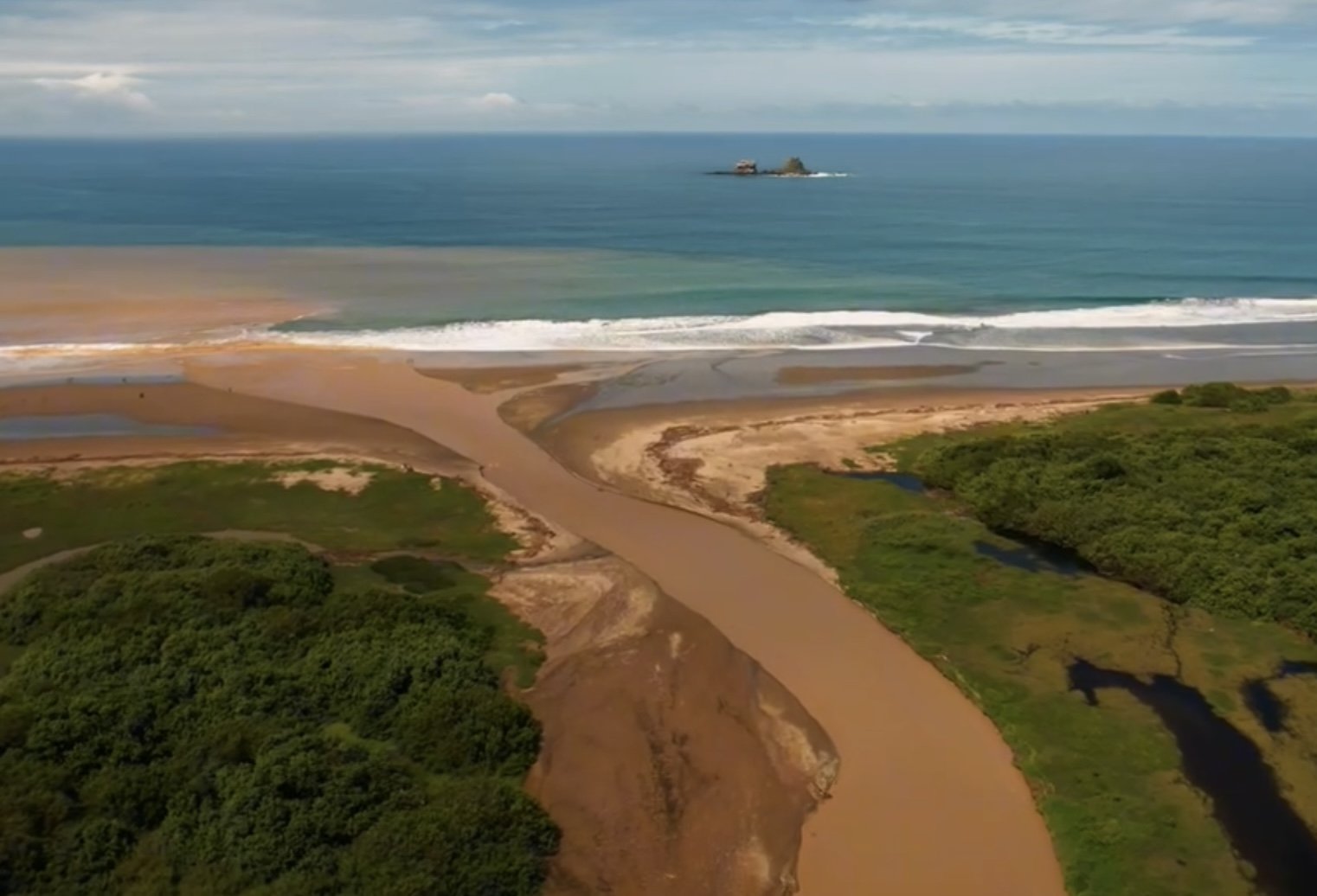
Sediment from Rio Ayampe carried into the ocean. Photo credit #ThisIsAyampe
Rivers, sediment, and the coastal zone
Many surf breaks exist where rivers meet the sea. River mouths can influence sandbar formation and nearshore currents within coastal systems shaped by tides, storms, and seasonal flows.
Rivers transport sediment eroded from hillsides, riverbanks, roads, and disturbed land downstream. Sand and finer particles are deposited where freshwater meets saltwater, forming sandbars and shoals near the river mouth. These underwater features influence how incoming swell interacts with the seafloor, affecting wave shape and breaking patterns along sandy coastlines.
This system is always changing. Seasonal river flows shift sandbars, while large storm events can move sediment offshore or redistribute it along the coast. The same physical processes that build beaches and estuaries also determine where sediment, nutrients, and contaminants accumulate.
Rivers do not only transport sediment. They carry everything that enters the watershed upstream, including nutrients, fecal bacteria, pathogens, organic matter, algae, heavy metals, pharmaceutical residues, and solid waste. In organic-rich runoff and sediments, heavy metals are not static particles but bond to organic molecules, forming complexes that are more mobile and more readily absorbed by living systems. These materials move through river networks in dissolved, suspended, and particulate forms, becoming more prevalent during heavy rain events.
After long dry periods, the first major rains create what is referred to as the first flush. This initial surge of runoff washes accumulated material off the land and into rivers and creeks. Stormwater from roads, parking areas, and paved surfaces combines with wastewater from leaking septic systems and untreated sewage. Sediment, nutrients, bacteria, chemical residues, and trash move together downstream. At the coast, this water enters the ocean right where people surf, swim, and spend time in the water.
In some systems, pollution spikes during the first major storm and then subsides. In others, particularly where wastewater infrastructure is limited or ongoing discharges occur, contamination persists throughout the rainy season.
Coastal examples
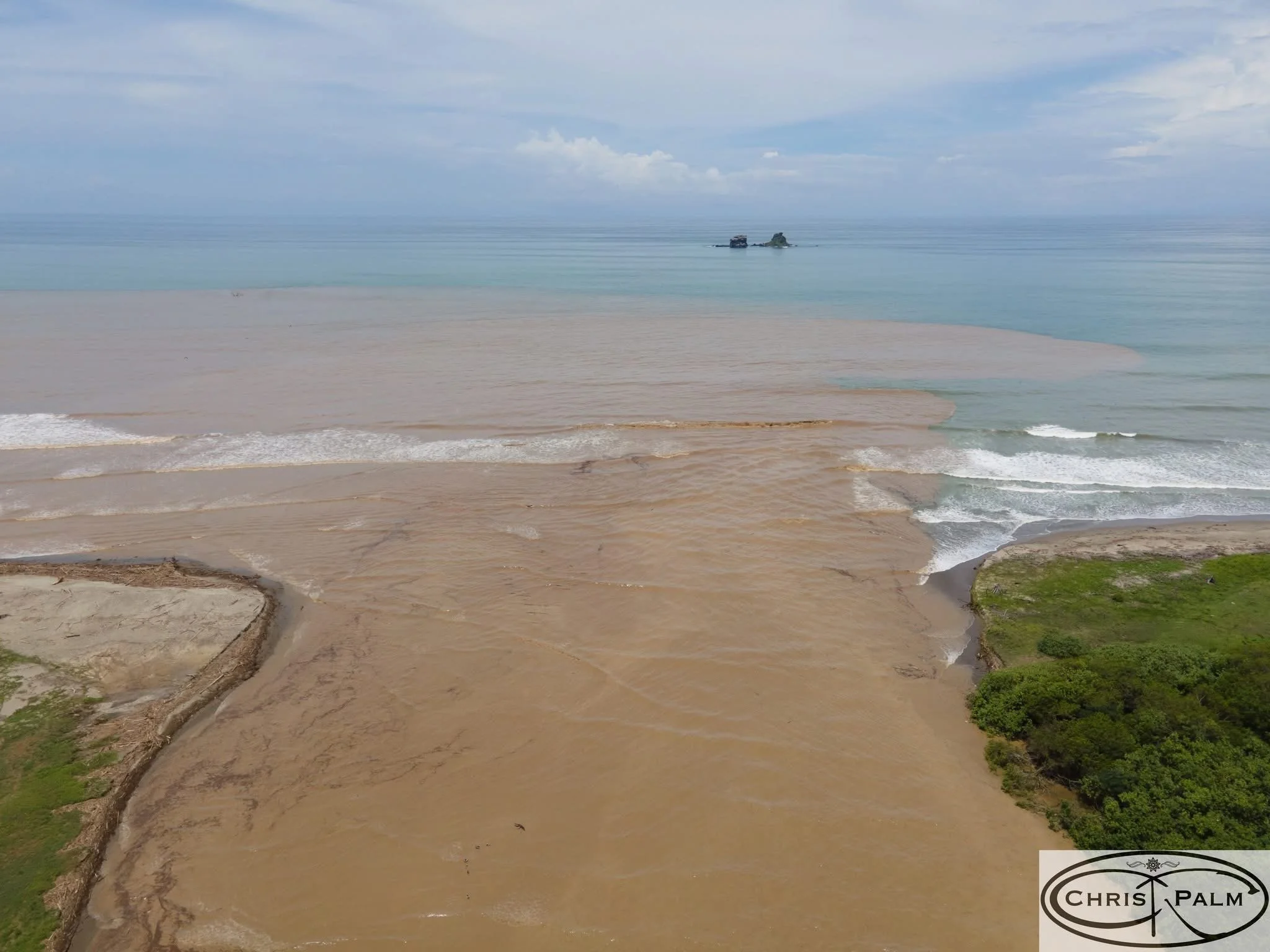
Rio Ayampe, Ecuador. Photo by Chris Palm
Here in Ecuador close to where I spend a lot of time, Rio Ayampe provides one example of how inland watersheds influence coastal water quality. Observations and water quality reports indicate that upstream contamination includes heavy metals as well as nutrients and microbial pollutants. During the rainy season, runoff can deliver a mix of contaminants to the river mouth. Nearshore water quality is most vulnerable after storms and during strong river plume conditions, when river discharge extends directly into the surf zone.
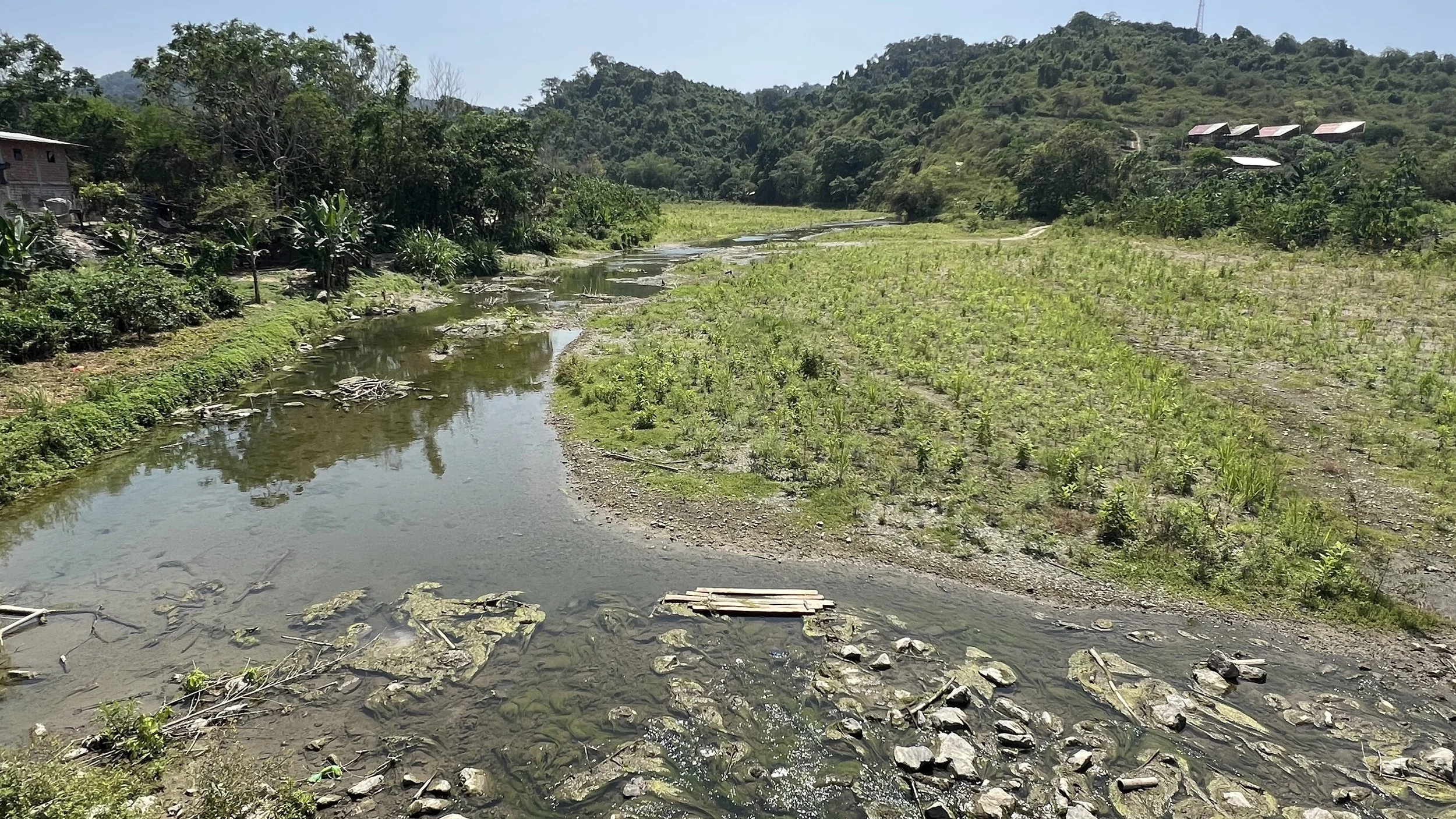
Algae bloom in Rio Ayampe during the dry season
At La Entrada, the dynamics are different but equally significant. Rio Entrada drains a very small catchment and flows directly through town before reaching the sea. In this setting, local contamination is dominated by town-scale wastewater rather than large agricultural operations.
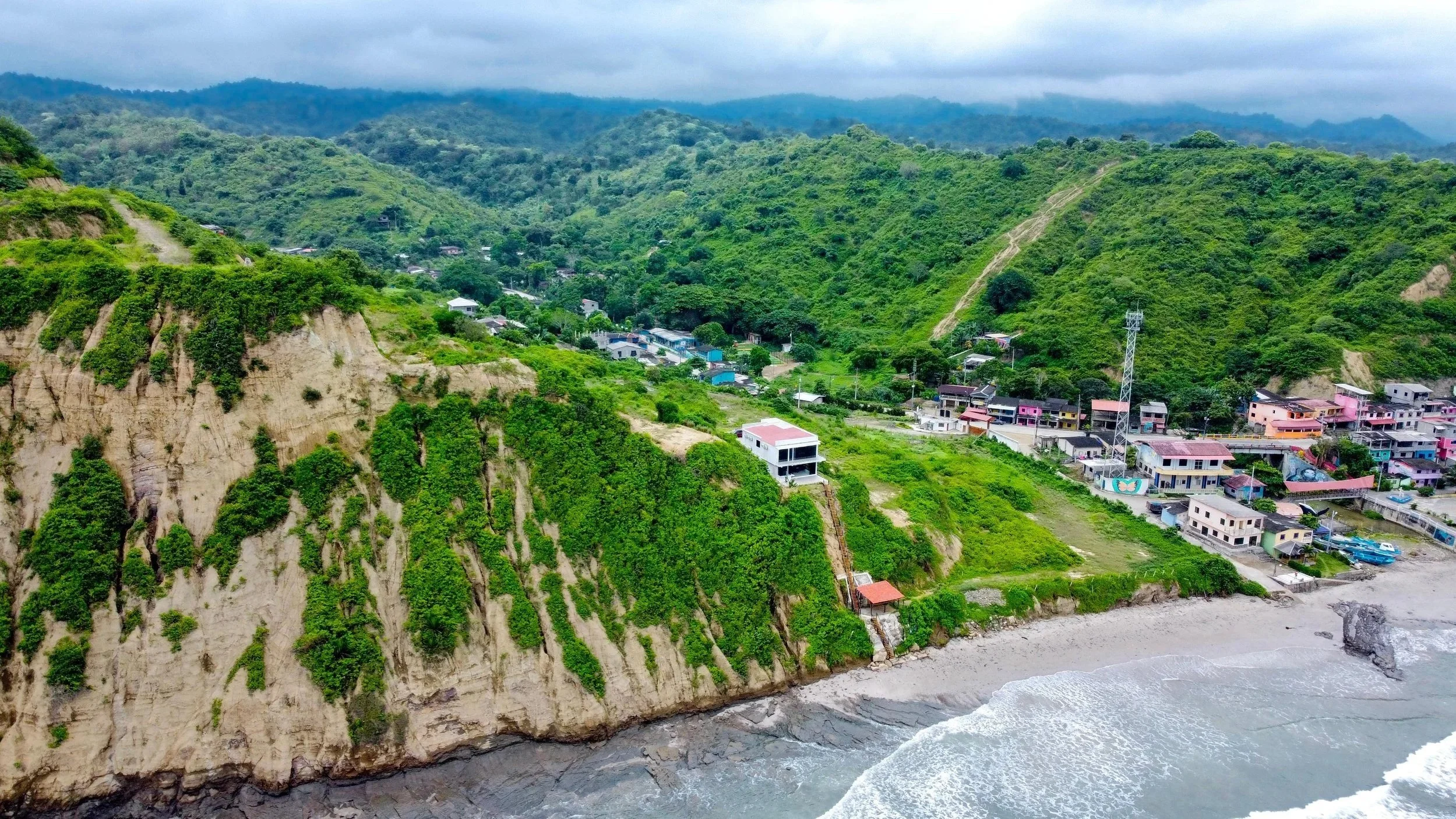
La Entrada, Ecuador
Small rivers draining towns without robust treatment infrastructure are frequently impacted by domestic sewage. During rain events, increased flow rapidly transports untreated wastewater into the ocean at the river mouth, making the immediate surf zone and adjacent shoreline particularly vulnerable during the wet season.
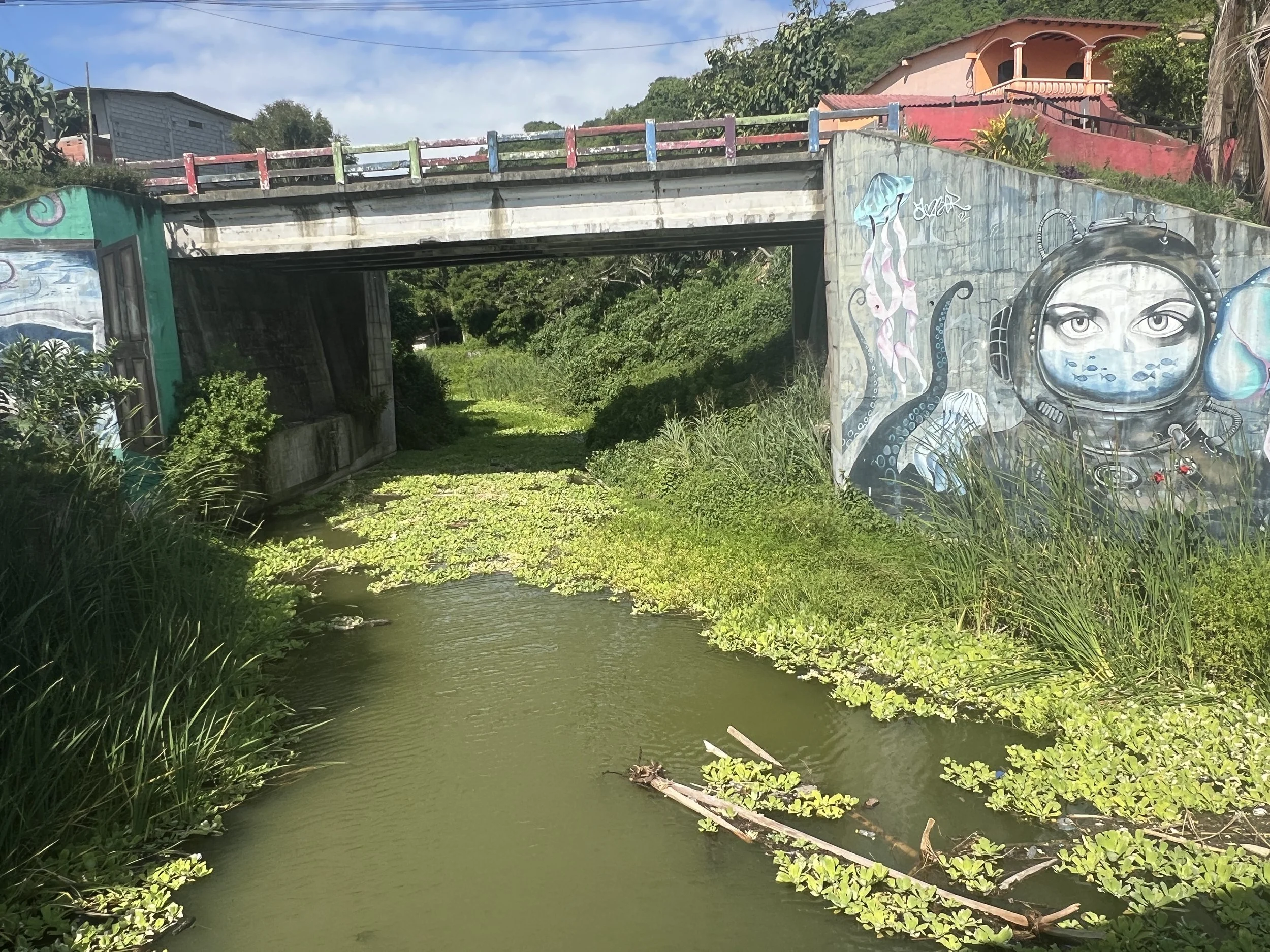
Algae bloom in Rio Entrada, Ecuador
In Montañita, higher tourism density and limited centralized sewer infrastructure create a more chronic water quality problem. Long standing concerns around wastewater, storm drainage, and solid waste near estuaries and coastal outlets point to conditions where contamination can persist throughout the rainy season, and in some areas even during dry periods. In this setting, baseline water quality may remain compromised, particularly near outfalls and estuarine channels, reflecting infrastructure that has not kept pace with growth.
Similar patterns occur elsewhere around the globe. Stormwater runoff from roads and urban surfaces carries oil, heavy metals, bacteria, and debris into rivers and drainage systems that discharge directly into the surf zone during rain events. Across these locations, wave quality may remain consistent, but water quality reflects cumulative impacts that originate far beyond the shoreline.
Below the surface
During the rainy season, river plumes often extend into the ocean, sometimes visible as discolored water spreading alongshore. Sandbars may still shape clean, rideable waves, but the physical processes that organize wave energy do not filter what is dissolved or suspended in the water. This creates a paradox common to river mouth surf breaks, where powerful waves and elevated exposure can coexist in the same place.
Risk to human health increases most markedly during and for at least twenty-four to seventy-two hours after a significant rainfall event, particularly near river mouths, estuaries, and visible outfalls. In towns with ongoing wastewater discharges, baseline contamination can remain elevated throughout the rainy season, making water appearance an unreliable indicator of safety. For surfers and swimmers, exposure during these periods increases the risk of ear infections, skin infections, and gastrointestinal illness.
Community impacts
For coastal communities, the impacts extend far beyond individual storm events. In towns without adequate wastewater infrastructure, contamination does not disappear between storms. Septic systems in high groundwater areas can leach continuously. Greywater and sewage enter rivers and drainage channels even during dry periods. Rain increases flow, speed, and spatial spread, creating a seasonal pattern in which rivers and nearshore waters remain compromised for weeks or months at a time.
The impacts are cumulative. Rivers degrade. Estuaries lose function. Nearshore ecosystems suffer. Fisheries are affected. Children swim in contaminated water. Residents live with water quality issues throughout the rainy season, not just during isolated storm events. Tourism intensifies these pressures. Surf destinations attract visitors, but infrastructure investment does not always keep pace with growth. The benefits of tourism are unevenly distributed, while environmental and health costs remain local.
A familiar pattern at river mouth surf breaks
I live close to Moonstone Beach, located in Trinidad, California. I spend a lot of time there, and it is one of the most beautiful beaches in Humboldt County. Moonstone sits where Little River enters the Pacific. It is a popular surf and recreation beach, and it is also one of the more closely monitored beaches on California’s North Coast. Water quality at Moonstone has been tracked for years by Humboldt Waterkeeper, in coordination with regional agencies and supported by analysis and reporting from organizations such as the Northcoast Environmental Center.
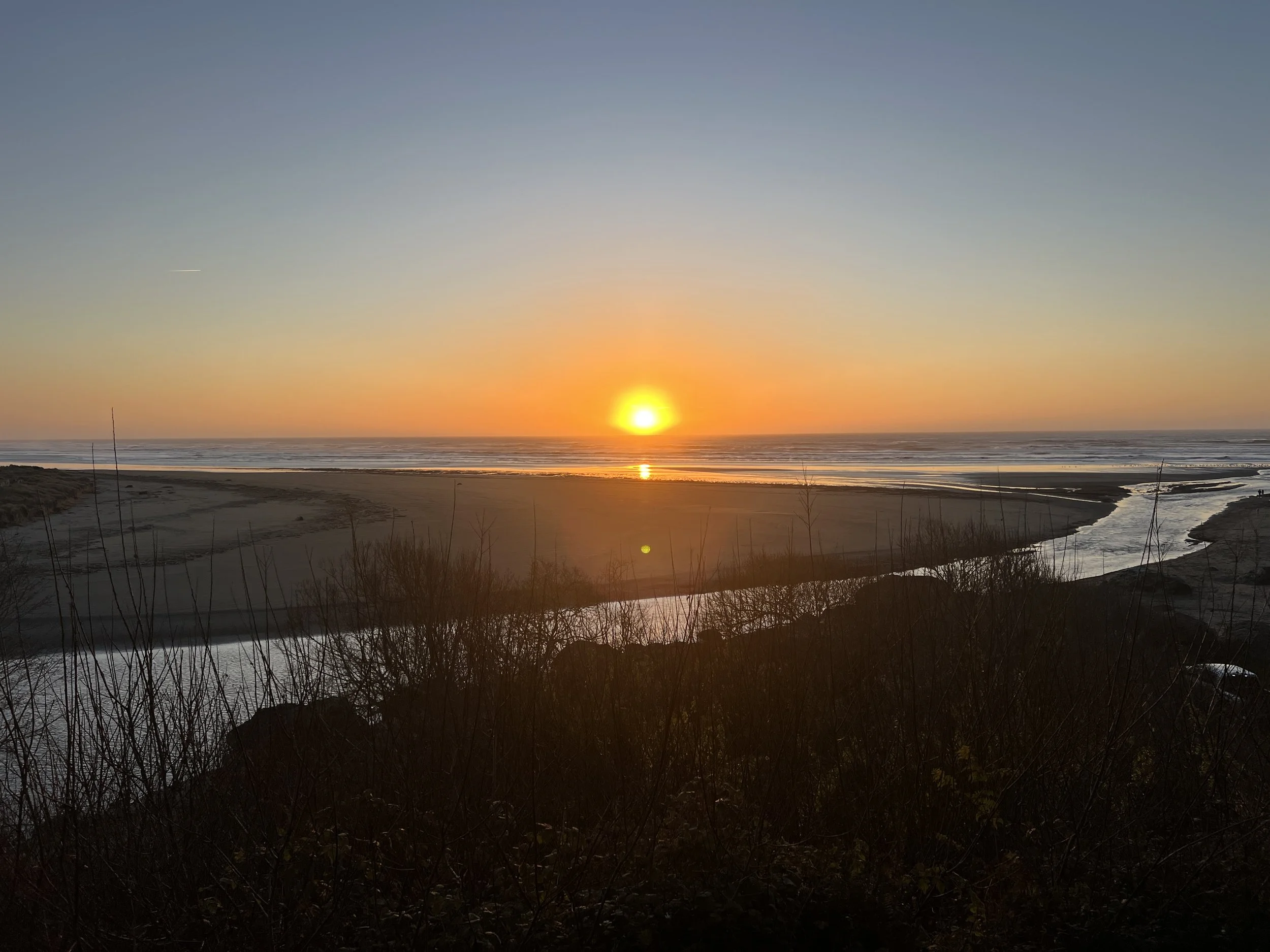
Little River and Moonstone Beach, California
Monitoring consistently shows elevated fecal bacteria following rain events, particularly during the first flush of the rainy season. Runoff from upstream sources, including cattle grazing and domestic septic systems, moves through the Little River watershed and enters the surf zone at Moonstone. As a result, the beach has appeared on California’s impaired waters list for bacteria and has ranked among the state’s more polluted beaches in multiple annual assessments. During and after the first rains of the season, the river mouth becomes a concentrated delivery point for everything moving through the watershed.
Other well documented examples of this pattern occur in other popular surf spots. Along the La Libertad coast of El Salvador, surf breaks such as El Tunco sit near river mouths that drain from dense development and major transportation corridors connecting inland cities to the coast. During the rainy season, stormwater carries oil, heavy metals, bacteria, and debris downstream, spreading river plumes alongshore into the surf zone. Coverage of these breaks often notes strong wave quality alongside recurring sewage and runoff concerns.
At the Tijuana River mouth near Imperial Beach, along the California–Baja California border, the surf break is located adjacent to a river system affected by long standing wastewater infrastructure failures upstream. Cross border sewage flows, and storm driven discharges have led to extended beach closures that directly affect surfers, swimmers, and nearby communities.
Across California, Central America, and other developed coastlines, river-mouth breaks follow the same physical logic. Rivers build sandbars that shape reliable waves. Those same rivers also deliver nutrients, bacteria, metals, and waste from across the watershed, especially during heavy rain events.
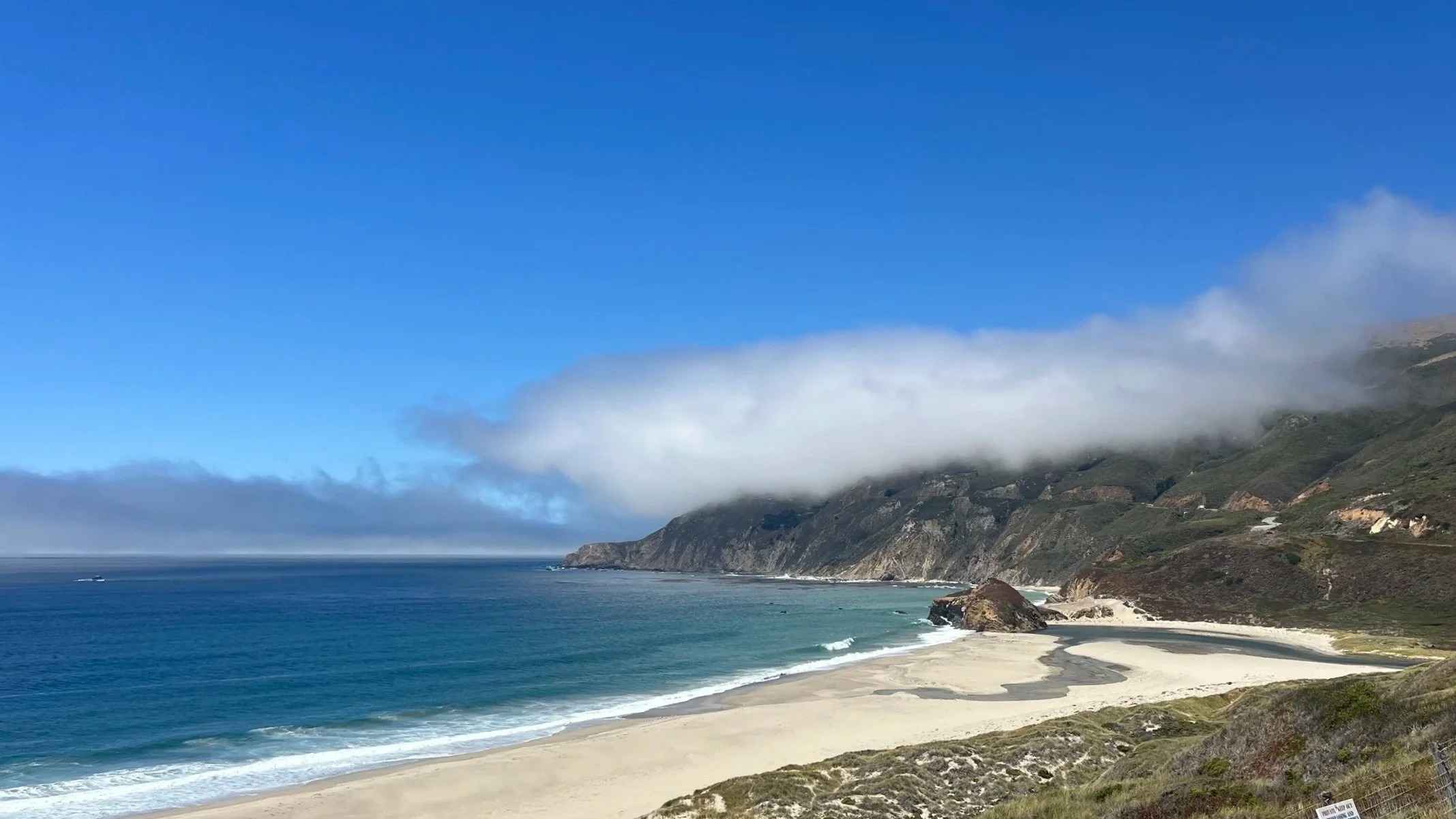
Big Sur, California
Attention, awareness, and care
What connects these places is not proximity, but attention, awareness, and care. At Moonstone, ongoing monitoring by Humboldt Waterkeeper provides clear, site-specific information about when water-quality risk is highest. In other parts of the world, organizations like the Surfrider Foundation and Surfers Against Sewage track sewage discharges and water-quality events at surf breaks and river outfalls, making this information visible and accessible to the surf community.
Awareness does not require stepping away from the water. It supports informed decisions about timing, conditions, and exposure. It also helps make the connection between watersheds and waves more visible. Growing up and living near rivers, estuaries, and the ocean has shaped how I notice these systems. Time spent in these places makes the connections easier to feel. What moves through a watershed continues beyond the river mouth, into the surf zone and coastal waters.
For many surfers and coastal communities, awareness becomes part of how people engage with the places they love. This shows up through beach cleanups, following local water-quality updates, and supporting watershed and river groups such as Waterkeeper and other local advocacy groups. Others stay connected through organizations like Surfers Against Sewage and the Surfrider Foundation, which offer ways to participate locally or help start new chapters where none exist. These groups exist because people who spend time in the ocean want to stay informed and be part of caring for the waters they enter.
Connection to water is already present. Awareness widens that connection beyond the wave itself, toward the rivers, infrastructure, and communities that shape nearshore conditions. Caring for water does not require doing everything at once. It begins with paying attention and choosing to take small steps to protect what gives us so much in return.