Mangroves: A Foundation of Coastal Resilience
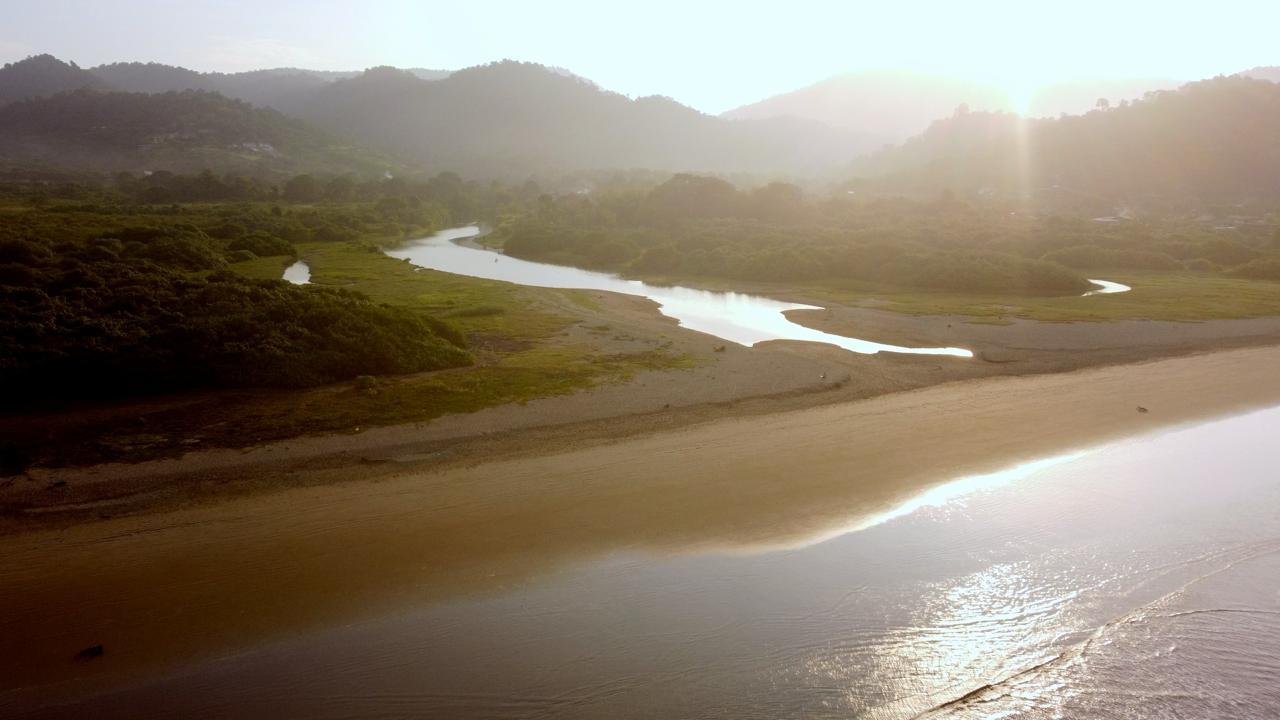
Mangroves are coastal forests that grow where freshwater and saltwater meet. They are adapted to tidal flooding, fluctuating salinity, and low-oxygen soils, conditions that most trees cannot survive. Because of these traits, mangroves create an ecosystem found nowhere else. They protect coastlines, stabilize soil, filter water, and support fisheries. They also store significant amounts of carbon, especially in their soils. When mangroves are removed, these functions disappear, and the impacts are seen across entire coastal systems.
Mangroves occur in tropical and subtropical regions around the world. In Ecuador, they grow along estuaries, river mouths, tidal flats, and sheltered coastal areas. Historically, mangrove forests extended across much more of Ecuador’s coastline than what remains today.
Mangroves in Ecuador: Where They Remain and Where They Were Lost
Although the largest remaining mangrove forests today occur in a few well-known estuaries, mangroves once grew far more broadly along the coast. Much of this habitat has been reduced or replaced by development and aquaculture over the last several decades. Coastal provinces that once supported wide mangrove wetlands now contain only fragments of what existed in the past. In many places the loss began long before the ecological value of mangroves was fully understood, and some smaller patches were cleared before they were ever formally mapped.
Shrimp aquaculture expanded rapidly in the 1980s and early 2000s, converting many estuaries and wetland complexes. Coastal development, hydrological changes, and urban growth also contributed to widespread loss. Today, Ecuador’s mangroves survive mostly in a handful of protected or less-developed estuarine systems, while many former mangrove areas have been altered beyond recognition.
Drivers of Mangrove Loss in Ecuador
Several factors have contributed to the decline of mangroves along Ecuador’s coast. Industrial shrimp farming has been the most significant driver, replacing natural mangrove areas with artificial ponds. Road construction and diking have blocked tidal channels and changed salinity levels, causing mangroves to die off. Coastal development, tourism infrastructure, and urban expansion have cleared large areas of habitat. Hydrological changes, including canalization and altered freshwater flow, have disrupted estuaries and prevented natural regeneration. Cutting for wood and charcoal, as well as pollution and nutrient runoff, have added additional stress. Together, these pressures have reshaped much of the coastline.
Ecology and Habitat
Mangroves act as a transition zone between marine and terrestrial ecosystems. Their roots create sheltered spaces where young fish, shrimp, crabs, and other species can grow and feed. They provide resting and feeding areas for coastal and migratory birds. By slowing tidal flow, mangrove roots help sediments settle, which improves water clarity and quality. The forest floor supports a web of life built on decaying leaves, microorganisms, and invertebrates that thrive in the nutrient-rich soils. Mangroves are central to the health and productivity of estuaries.
A wide variety of marine and coastal species rely on mangroves at some stage of their lives. Many fish that support local fisheries begin their early growth in mangrove channels before moving into the open ocean. Crabs, shrimp, mollusks, and other shellfish depend on mangrove habitat for food and protection. Coastal birds, such as herons, egrets, and other wading species, forage in mangrove wetlands. Small mammals, reptiles, and dolphins also benefit from mangrove ecosystems in different ways.
Along this part of the coast in Manabi, sea turtles are especially important. They feed and rest in nearby ocean waters and depend on the health of the larger coastal ecosystem, including estuaries and mangrove edges, for shelter and for food sources during different life stages. The protection of mangroves contributes to the overall health of these coastal areas, which in turn supports the conditions sea turtles rely on for survival. Even though nesting occurs on the beaches rather than in the mangroves themselves, the wellbeing of turtles is closely tied to the health of the entire coastal system. These forests anchor the food web that sustains life along the shoreline, extending benefits beyond the boundaries of the mangrove itself.
Camarones, Mangroves, and Coastal Communities
Wild Penaeus vannamei (local camarones), are part of a natural cycle that moves between the ocean, estuaries, and rivers. Healthy mangrove ecosystems are central to that cycle. Mangrove root systems provide shelter and structure for juvenile shrimp, supporting early growth before they move into open water or upstream into river systems.
Along Ecuador’s coast, many local and artisanal communities have historically relied on mangrove-lined rivers and estuaries for small-scale fishing and gathering. Camarones, crabs, and estuary fish have long been part of local diets and livelihoods, harvested from mangrove creeks, river channels, and tidal edges. These practices depend not only on healthy habitat, but also on continued access to waterways shaped by mangrove structure and tidal flow.
When mangroves are cleared or fragmented, the impacts extend beyond ecology degradation. Shrimp ponds, dikes, and roads often replace or block mangrove channels, reducing access to traditional fishing areas and altering the hydrology that supports nursery habitat. Changes in salinity, sedimentation, and water quality disrupt the migration patterns shrimp rely on, while the loss of mangrove roots reduces shelter and food availability. Together, these changes contribute to declining abundance of wild camarones and other mangrove-dependent species.
For many communities, this has meant fishing longer hours, traveling farther upriver or along the coast, or shifting away from species that once formed a reliable food source. These changes carry economic and social costs, particularly for households that depend most directly on estuarine fisheries for nourishment and income.
In contrast, farmed shrimp are produced in artificial ponds that often replace natural wetlands and restrict public access to waterways. These operations may rely on feeds and chemicals and can discharge waste into surrounding waters. During storms or floods, shrimp may escape from ponds and interact with wild populations and often carry diseases, amplifying impacts. Much of the shrimp produced for export comes from farms built on former mangrove lands, linking global demand to local habitat loss and community displacement.
The decline of wild camarones is therefore not only an ecological issue, but a community one. Mangrove loss weakens the food web that supports rivers and estuaries and erodes the relationship between people and place that has sustained coastal communities for generations.
Ecological and Community Significance
Mangroves are a foundation of coastal resilience. They stabilize shorelines, support fisheries, filter water, and store large amounts of carbon. When they disappear, the ecological functions they provide cannot be replaced by any other system. Their loss affects the nurseries that support ocean life, the filtration processes that keep estuaries clean, and the roots that hold the coastline in place.
The impacts reach into communities. Mangroves support local food systems, protect against erosion and storms, and sustain small-scale fisheries. When mangroves decline, these benefits decline with them. Entire estuarine systems can begin to unravel, and the effects are immediate and long-lasting.
The cost of losing mangroves shows up in declining fisheries, disappearing camarones, eroding shorelines, polluted water, and increased vulnerability for coastal towns. Once removed, mangroves take decades to recover, and restored forests rarely match the complexity of a mature system. Mangroves are a system we cannot replace. Their presence signals a functioning and resilient coastline; their loss signals decline. The pressures on Ecuador’s coastline continue to grow, and choices made today determine what will remain for future generations. The health of our ecosystem is tied directly to the wellbeing of our communities and our coastal landscapes.