Green Infrastructure: How Healthy Watersheds Store and Clean Water
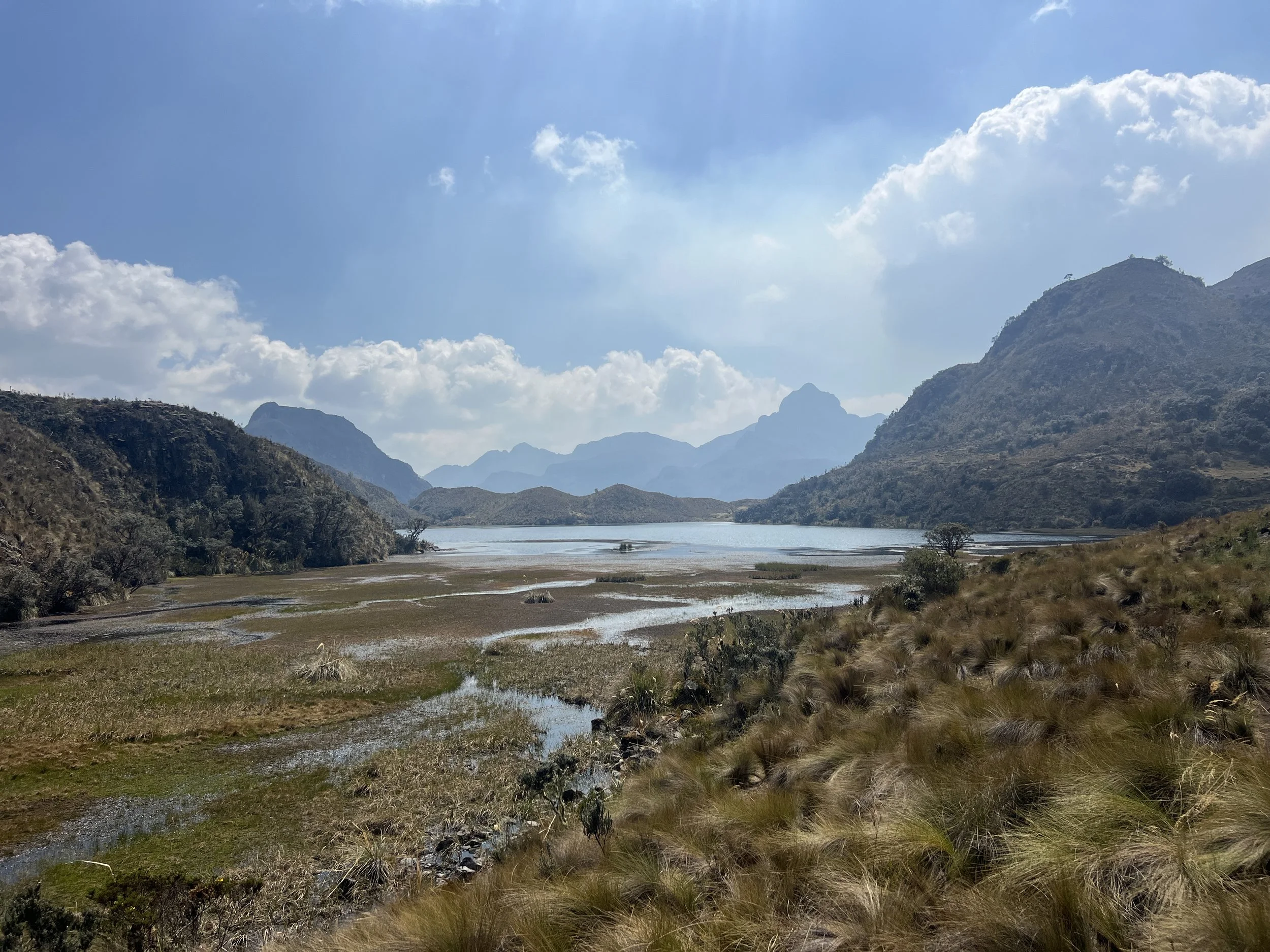
Cajas National Park, Ecuador
Why protecting watersheds is the most effective investment in water security
A Natural Reservoir
The most reliable reservoir is not built out of concrete. It already exists in the form of forests, wetlands, and soils that absorb, filter, and release water in balance. These living systems are known as green infrastructure, and they are the foundation of a healthy watershed.
In hydrology, a watershed is the natural boundary that defines where water flows across a landscape, collecting in rivers, lakes, and aquifers. Within that boundary, the landscape determines how water flows. When vegetation is intact and soils are rich in organic matter, rainfall infiltrates the ground, recharges groundwater, and sustains flow through the dry season. When the land is degraded, water may not percolate as well and can run off the surface, carrying sediment and pollutants downstream.
Healthy watersheds support the natural processes that regulate water flow, reduce flooding, sustain baseflow during dry periods, filter contaminants, and maintain the conditions that allow life to thrive.
Infiltration and Filtration
In a healthy watershed, the first layer of protection is vegetation. Leaves intercept rain, allowing it to evaporate or gently drip onto the ground. This slows erosion and reduces surface runoff. Beneath the canopy, roots create pathways for infiltration, guiding water deep into the soil profile. The soil acts as both a sponge and a filter. Infiltrating water passes through layers of mineral particles and organic matter that trap sediments, heavy metals, and pathogens. Microbial communities in the soil then break down many of the organic compounds that would otherwise pollute waterways.
During heavy rainfall in forested landscapes, we can observe how water infiltrates the ground until the soil becomes saturated, compared to logged, burned, compacted, or paved areas where runoff occurs almost immediately. That difference determines whether a region experiences steady baseflow or flash floods after storms.
Groundwater stored in permeable soils and fractured rock later resurfaces as springs or seeps, feeding streams and rivers during dry months. This slow release, known as baseflow, is what keeps rivers and creeks flowing long after the rain has stopped. I observe this often in late summer while walking through the coastal redwood forests near creeks, and see springs surface this time of year.
The Cost of Replacing Nature
Traditional gray infrastructure such as reservoirs, storm drains, levees, and treatment plants has been designed to control and contain water. While essential in many settings, these systems are costly to build and maintain, and they often degrade over time. They also treat water as waste to be removed rather than as a resource to be absorbed and renewed.
EPA Drinking Water Infrastructure Needs Survey and Assessment estimates that U.S. drinking water systems alone will require approximately 648.8 billion dollars in upgrades over the next two decades. Multiple studies also show that protecting upstream watersheds often costs significantly less than constructing and maintaining new treatment facilities downstream.
New York City provides a well documented example. The forested watersheds that supply its drinking water are managed and protected through conservation easements, ensuring natural filtration at the source. This approach has saved billions of dollars that would otherwise have been spent on building and operating filtration plants. Similar results are being documented across California, where watershed protection and forest restoration are increasingly recognized as essential parts of water-supply planning.
Green Infrastructure in Practice
Green infrastructure can be engineered or ecological, but the most effective systems mimic natural processes. Examples include:
• Wetland restoration, which captures stormwater and removes nitrogen, phosphorus, and suspended solids through plant uptake.
• Riparian buffers, strips of vegetation along waterways that reduce erosion and nutrient loading.
• Permeable surfaces and bioswales, which allow urban runoff to infiltrate rather than overwhelm storm drains.
• Reforestation and meadow restoration, which rebuild soil structure and increase infiltration capacity.
These systems reduce flooding, improve water quality, and restore ecological function. They also create other benefits such as carbon storage, wildlife habitat, and recreational space for communities.
The Soil-Water Relationship
Soil health is the foundation of green infrastructure. A single teaspoon of healthy soil can contain billions of microorganisms that cycle nutrients, build structure, and stabilize carbon. Organic matter binds particles into aggregates, creating pore spaces that store water. High soil organic matter increases the capacity for water storage in soils and decreases runoff.
When soils lose organic matter through overgrazing, tillage, or development, their water holding capacity declines dramatically. Runoff increases, erosion accelerates, and pollutants travel farther. Conversely, regenerative land management such as cover crops, composting, managed grazing, and reforestation builds the soil back into a living water storage system.
The Living Sponges of the Earth
Across ecosystems and continents, the planet has evolved extraordinary ways to hold water within the land. Wetlands, bogs, peatlands, and high elevation grasslands each act as living sponges, capturing rainfall, storing it for months or even years, and slowly releasing it downstream.
In the temperate zones of North America, peat bogs are among the most effective natural filtration systems known. Layers of sphagnum moss accumulate over centuries, forming thick mats of partially decomposed organic matter that can reach several meters deep. These layers trap sediments, absorb nutrients, and bind heavy metals, creating a natural filter that purifies water as it moves through the landscape. These wetland soils store extraordinary volumes of carbon- roughly twice the total held by the world’s forests.
Farther south, in the high Andes of Ecuador and Peru, lie the páramo systems. These alpine grasslands sit above the tree line, often in mist and cloud, where cushion plants and dense bunch grasses weave deep organic soils. The páramo holds water like a living reservoir. Each root mass and hummock stores rainfall and condensation, releasing it gradually into a vast network of streams and river systems that feed into the Amazon on one side and the Pacific on the other. Hydrologists studying Cajas National Park have found that these soils can retain up to ninety percent of their volume in water, functioning as both a sponge and a filter for this high mountain watershed. My time hiking through Cajas was like walking on soft cushions due to the high organic matter built up in the soil.
Trees as Living Water Storage Systems
Forests are not only filters but also reservoirs. Each tree functions as a water storage system, taking in and holding moisture during the wet season and slowly releasing it when conditions become dry. Through a process known as hydraulic redistribution, the roots of trees draw water upward from moist subsurface layers and share it with surrounding vegetation through the upper soil. In late summer, when rainfall is scarce, many trees reduce transpiration to conserve energy and moisture. Some species even release small amounts of stored water back into the soil, helping maintain the microclimate that supports understory plants, fungi, and soil life. This exchange between tree and soil is another form of reciprocity in nature. The forest acts as both a sponge and a slow release reservoir, moderating the flow of water through the watershed even in the driest months.
Forest Cover and the Regulation of Water Flow
Some studies suggest that thinning or removing trees can temporarily increase streamflow by reducing transpiration. While this may appear beneficial in the short term, the effect is brief and often comes at a cost. When forests are removed, the soil loses its protective cover. Without deep roots and organic matter to hold it, rainfall no longer infiltrates but rushes across the surface. Water that once moved slowly through soil now races downslope, carrying sediment, ash, and debris into streams.
In heavy rainfall, this runoff reaches rivers too quickly, leading to flooding, erosion, and the loss of valuable topsoil. The same water that once nourished the landscape becomes destructive. When it reaches estuaries and bays, it carries sediment that clouds the water and smothers aquatic life. Fish, amphibians, and invertebrates depend on clean, oxygen-rich water, and these surges of mud and debris degrade their habitat and the ecosystem.
The presence of forest cover slows this process down. Roots and soil act as a sponge, absorbing rainwater and allowing it to percolate gradually into the groundwater. This delayed release supports steady streamflow long after storms pass. Allowing rivers to meander through floodplains and recharge the aquifer is part of what true green infrastructure means. The water is not lost when it spreads or soaks in. It is filtered, cooled, and returned in time. The process of slowing, holding, and releasing is how nature regulates water. Let’s focus on restoring ecological balance to move towards sustainability!
Forest and Riparian Cooling
Walking into a forest after being in an open or cleared area, the difference in temperature is immediate and remarkable. Forests and riparian corridors provide natural cooling through shade, moisture retention, and reduced air movement. Trees intercept sunlight, their leaves transpire water vapor, and the canopy slows wind, creating a humid, temperate microclimate. These conditions protect the forest floor from drying and reduce the rate of evaporation from soils and streams.
Riparian vegetation- the grasses, shrubs, and trees growing along rivers and creeks- extends this cooling effect directly to the water. In shaded reaches, water temperatures remain several degrees lower than in exposed channels. This cooling is essential for fish, amphibians, and invertebrates that depend on cold, oxygen rich water. Even small increases in temperature can alter dissolved oxygen levels and disrupt sensitive species such as salmonids.
Forested and vegetated streambanks also help stabilize channels, filter sediment, and slow the flow of surface water entering streams. This combination of shading, stability, and gradual release creates a more resilient hydrologic system. It is one reason why intact riparian zones are so critical to watershed health.
In contrast, cleared or logged areas often experience higher air and water temperatures, faster evaporation, and greater loss of soil moisture. The difference can be felt not only in the heat of the air but also in the pulse of the land itself. A forest regulates temperature through balance and rhythm, keeping both the ecosystem and the water within it alive and well.
Watershed Resilience and Water Security
In a world where many regions face growing water scarcity, resilience depends on maintaining the natural systems that store and clean water for free. Across the globe, communities struggle with the cost of filtration, storage, and delivery. As populations expand and demand increases, the most affordable and sustainable solution remains protection of the source.
Forests, wetlands, and meadows reduce the burden on engineered systems by filtering pollutants, recharging aquifers, and providing natural cooling. In the field, the difference is clear: walk from a paved landscape into a healthy forest, and the temperature can drop by ten degrees. These living systems are nature’s way of balancing extremes and ensuring long term water availability.
Economic and Policy Perspectives
Investing in natural infrastructure is both practical and cost effective. Maintaining healthy watersheds can reduce water treatment costs by more than fifty percent in some regions. The return on investment from watershed protection is among the highest of any environmental action because every dollar spent upstream saves many more downstream.
Effective policy and planning are essential to sustaining green infrastructure. Public and private initiatives must prioritize watershed protection as a core strategy for long term water security. This means directing funding, research, and land management programs toward maintaining natural systems that store, filter, and regulate water. When green infrastructure is integrated into local and regional water planning, it strengthens both ecological and economic resilience, reducing the need for costly engineered systems downstream.
A Return to the Source
When we look at nature through the lens of infrastructure, we begin to see design perfected over millennia. Forest roots are pipelines. Wetlands are treatment plants. Topsoil and aquifers are a storage tanks. Unlike human engineering, these systems improve with time if we care for them. Let us learn from nature for our solutions to address water scarcity.
The most advanced technology we have for clean water is still the living Earth. Protecting and restoring healthy watersheds is not an optional environmental project; it is the foundation of water security, public health, and community resilience.
References
Brooks, J. R., Meinzer, F. C., Coulombe, R., & Gregg, J. (2002). Hydraulic redistribution of soil water during summer drought in two contrasting Pacific Northwest coniferous forests. Tree Physiology, 22(15-16), 1107–1117.
https://doi.org/10.1093/treephys/22.15-16.1107
Environmental Protection Agency (EPA). (2015). Economic Benefits of Protecting Healthy Watersheds: Factsheet 3. U.S. Environmental Protection Agency, Office of Water.
https://www.epa.gov/sites/default/files/2015-10/documents/economic_benefits_factsheet3.pdf
Environmental Protection Agency (EPA). (2022). 20th Drinking Water Infrastructure Needs Survey and Assessment: Report to Congress. U.S. Environmental Protection Agency, Office of Water.
https://www.epa.gov/sites/default/files/2023-02/documents/20th_drinking_water_infrastructure_needs_survey_and_assessment_report_to_congress_feb_2023.pdf
Guío Blanco, C. M., Brito Gómez, V. M., Crespo, P., & Ließ, M. (2018). Spatial prediction of soil water retention in a páramo landscape: Methodological insight into machine learning using random forest. Geoderma, 316, 100–114.
https://www.researchgate.net/publication/321906561_Spatial_prediction_of_soil_water_retention_in_a_Paramo_landscape_Methodological_insight_into_machine_learning_using_random_forest
United Nations Environment Programme (UNEP). (2020). Peatlands store twice as much carbon as all the world’s forests.
https://www.unep.org/news-and-stories/story/peatlands-store-twice-much-carbon-all-worlds-forests
U.S. Geological Survey (USGS). (1998). Ground Water and Surface Water: A Single Resource. Circular 1139, by Winter, T. C., Harvey, J. W., Franke, O. L., & Alley, W. M.
https://pubs.usgs.gov/circ/circ1139/